Technology Development
Automated Experimentation & Genome-Wide Analysis
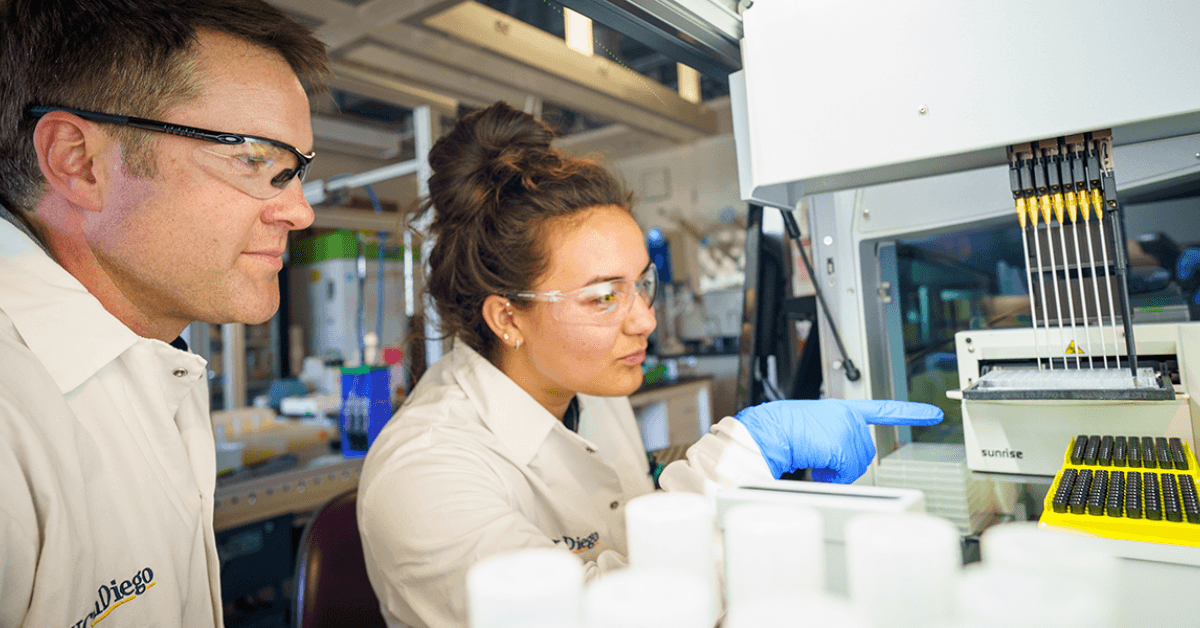
ALEbots automate adaptive laboratory evolution around the clock, turning a slow manual process into a high-throughput tool for engineering and discovery. Every experiment feeds our mutation-analysis pipelines and ALEdb, while genome-scale models and omics connect genotype to phenotype and turn data into predictions.

Research and Applications
From New Biology to Real Applications
Evolution reveals biology we didn't know was possible, from new traits and genetic content to unexpected paths from genotype to phenotype. Our platform captures these changes systematically, deepening our understanding of how microbes adapt while engineering strains for real-world applications, from melatonin and specialty chemicals to plastic degradation.

Education
Educating the Next Generation
Our lab is a hands-on training ground where students and researchers learn at the intersection of automation, evolution, and computational biology across San Diego and Copenhagen. Through classrooms, workshops, open resources like ALEdb, and our shared ALE Core facility, we make these tools and data accessible to the next generation of bioengineers and collaborators worldwide.
Technology Development
Automated Experimentation & Genome-Wide Analysis
ALEbots automate adaptive laboratory evolution around the clock, turning a slow manual process into a high-throughput tool for engineering and discovery. Every experiment feeds our mutation-analysis pipelines and ALEdb, while genome-scale models and omics connect genotype to phenotype and turn data into predictions.
Research and Applications
From New Biology to Real Applications
Evolution reveals biology we didn't know was possible, from new traits and genetic content to unexpected paths from genotype to phenotype. Our platform captures these changes systematically, deepening our understanding of how microbes adapt while engineering strains for real-world applications, from melatonin and specialty chemicals to plastic degradation.

Education
Educating the Next Generation
Our lab is a hands-on training ground where students and researchers learn at the intersection of automation, evolution, and computational biology across San Diego and Copenhagen. Through classrooms, workshops, open resources like ALEdb, and our shared ALE Core facility, we make these tools and data accessible to the next generation of bioengineers and collaborators worldwide.
Technology Development
Automated Experimentation & Genome-Wide Analysis
ALEbots automate adaptive laboratory evolution around the clock, turning a slow manual process into a high-throughput tool for engineering and discovery. Every experiment feeds our mutation-analysis pipelines and ALEdb, while genome-scale models and omics connect genotype to phenotype and turn data into predictions.
Research and Applications
From New Biology to Real Applications
Evolution reveals biology we didn't know was possible, from new traits and genetic content to unexpected paths from genotype to phenotype. Our platform captures these changes systematically, deepening our understanding of how microbes adapt while engineering strains for real-world applications, from melatonin and specialty chemicals to plastic degradation.
Education
Educating the Next Generation
Our lab is a hands-on training ground where students and researchers learn at the intersection of automation, evolution, and computational biology across San Diego and Copenhagen. Through classrooms, workshops, open resources like ALEdb, and our shared ALE Core facility, we make these tools and data accessible to the next generation of bioengineers and collaborators worldwide.
Technology Development
Automated Experimentation & Genome-Wide Analysis
ALEbots automate adaptive laboratory evolution around the clock, turning a slow manual process into a high-throughput tool for engineering and discovery. Every experiment feeds our mutation-analysis pipelines and ALEdb, while genome-scale models and omics connect genotype to phenotype and turn data into predictions.
Research and Applications
From New Biology to Real Applications
Evolution reveals biology we didn't know was possible, from new traits and genetic content to unexpected paths from genotype to phenotype. Our platform captures these changes systematically, deepening our understanding of how microbes adapt while engineering strains for real-world applications, from melatonin and specialty chemicals to plastic degradation.
Education
Educating the Next Generation
Our lab is a hands-on training ground where students and researchers learn at the intersection of automation, evolution, and computational biology across San Diego and Copenhagen. Through classrooms, workshops, open resources like ALEdb, and our shared ALE Core facility, we make these tools and data accessible to the next generation of bioengineers and collaborators worldwide.
WHAT WE DO
Lab Automation
Developing autonomous experimental platforms that combine robotics, real-time monitoring, and custom software.
Lab Automation
Developing autonomous experimental platforms that combine robotics, real-time monitoring, and custom software.
Microbial Engineering
Engineering microbial systems to better understand biological processes and enable new applications in biotechnology.
Microbial Engineering
Engineering microbial systems to better understand biological processes and enable new applications in biotechnology.
Quantitative Biology
Using computational tools, data analysis, and modeling to uncover patterns in complex biological systems.
Quantitative Biology
Using computational tools, data analysis, and modeling to uncover patterns in complex biological systems.
OUR IMPACT
Publications
Peer-reviewed publications, datasets, and models advancing research across automation, adaptive laboratory evolution, metabolic engineering, and genome-scale systems biology.
Publications
Peer-reviewed publications, datasets, and models advancing research across automation, adaptive laboratory evolution, metabolic engineering, and genome-scale systems biology.
Publications
Peer-reviewed publications, datasets, and models advancing research across automation, adaptive laboratory evolution, metabolic engineering, and genome-scale systems biology.
Scientists Trained
PhD and master's students, postdoctoral fellows, research staff, and undergraduates mentored in the lab.
Scientists Trained
PhD and master's students, postdoctoral fellows, research staff, and undergraduates mentored in the lab.
Scientists Trained
PhD and master's students, postdoctoral fellows, research staff, and undergraduates mentored in the lab.
Collaborations
Partner companies, national laboratories, and universities across four continents driving scientific discovery and meaningful applications.
Collaborations
Partner companies, national laboratories, and universities across four continents driving scientific discovery and meaningful applications.
Collaborations
Partner companies, national laboratories, and universities across four continents driving scientific discovery and meaningful applications.
Evolved Populations
Independent populations evolved through adaptive laboratory evolution to study microbial adaptation and evolutionary change.
Evolved Populations
Independent populations evolved through adaptive laboratory evolution to study microbial adaptation and evolutionary change.
Evolved Populations
Independent populations evolved through adaptive laboratory evolution to study microbial adaptation and evolutionary change.
FEATURED



LAB TOPICS
LAB FOCUS
We use adaptive laboratory evolution (ALE), a type of evolutionary engineering, to improve microbial strains by letting organisms evolve under controlled conditions. Combining automation, experimental design, and genomic analysis, we identify beneficial mutations that enhance growth, tolerance, production, and more across diverse organisms.
Adaptive Laboratory Evolution

Adaptive Laboratory Evolution
Evolving microbes for application and discovery

Laboratory Automation
High-throughput experimental platforms

Bioinformatics
Mutation analysis and ALEdb

Microbial Engineering
Engineering microbes for biotechnology

Systems Biology
Genome-scale measurement and modeling
LAB FOCUS
We use adaptive laboratory evolution (ALE), a type of evolutionary engineering, to improve microbial strains by letting organisms evolve under controlled conditions. Combining automation, experimental design, and genomic analysis, we identify beneficial mutations that enhance growth, tolerance, production, and more across diverse organisms.
Adaptive Laboratory Evolution
Adaptive Laboratory Evolution
Evolving microbes for application and discovery
Laboratory Automation
High-throughput experimental platforms
Bioinformatics
Mutation analysis and ALEdb
Microbial Engineering
Engineering microbes for biotechnology
Systems Biology
Genome-scale measurement and modeling
Lab Locations
San Diego, CA
University of California San Diego
Copenhagen, Denmark
Technical University of Denmark
Get in Touch
In accordance with applicable Federal and State law and University policy, the University of California does not discriminate, or grant preferences, on the basis of race, color, national origin, religion, sex, disability, and/or other protected categories. More information about Proposition 209 can be found here. More information about the University of California Anti-Discrimination Policy can be found here. Initiatives are open to all eligible members of the UC San Diego campus community and does not discriminate against, or grant preferential treatment to, any individual or group on the basis of race, color, national origin, religion, sex, disability, and/or other protected categories.
©2026 by Adam Feist and UC San Diego. All rights reserved.
Lab Locations
San Diego, CA
University of California San Diego
Copenhagen, Denmark
Technical University of Denmark
Get in Touch
In accordance with applicable Federal and State law and University policy, the University of California does not discriminate, or grant preferences, on the basis of race, color, national origin, religion, sex, disability, and/or other protected categories. More information about Proposition 209 can be found here. More information about the University of California Anti-Discrimination Policy can be found here. Initiatives are open to all eligible members of the UC San Diego campus community and does not discriminate against, or grant preferential treatment to, any individual or group on the basis of race, color, national origin, religion, sex, disability, and/or other protected categories.
©2026 by Adam Feist and UC San Diego. All rights reserved.