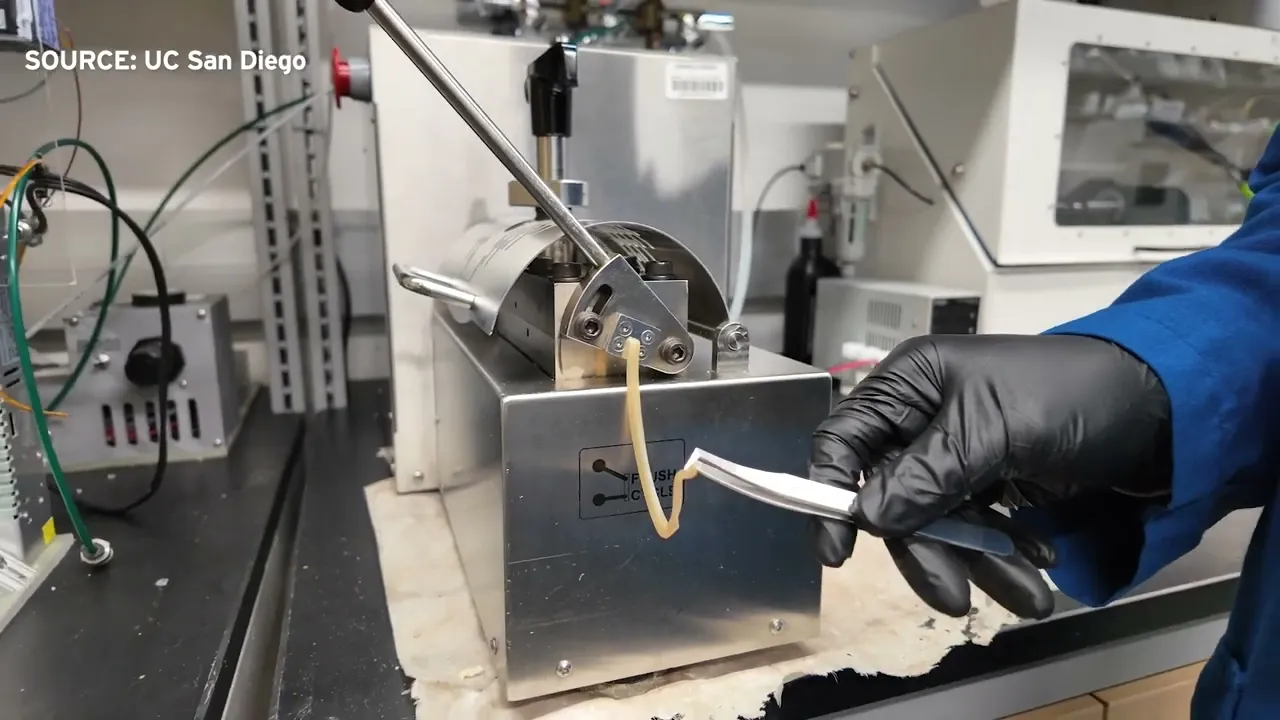

The ALEbot is an automated cultivation system we designed and built ourselves, undergoing several versions and upgrades over the last 15 years and now in its third generation. Its defining feature is not simply that it runs without a person at the bench, but that it makes experiments possible that no one could carry out manually. A single machine maintains 40 or more microbial populations in parallel, continuously, for months at a time, which is the duration real adaptation can require. Passage regimes can be far more complex than a human could reliably execute, and the selection pressure itself can be changed dynamically over the course of a run. Culture parameters such as cell density are measured and recorded in real time, and passaging happens automatically the moment a culture crosses a defined threshold, so every population is transferred at a consistent physiological state rather than whenever someone happened to be available or when the whole plate needed attention. The recorded live data stream enables closed-loop control, meaning conditions can be adjusted in response to how cultures are actually behaving. That makes whole classes of experiment practical for the first time: selections that escalate as populations adapt, protocols that respond to a growth rate rather than a clock, and high-throughput campaigns that a person could not execute by hand.
Continuous cultivation is only half of what the platform provides. The systems sample and enable archival robotically throughout a run, generating a complete frozen record of every lineage. Supernatant can be collected automatically for exometabolomic analysis, with sampling for additional omics measurements planned for future versions. The same hardware also runs much shorter experiments, performing automated growth phenotyping and condition screening on timescales of days for characterization work that does not require a full evolution campaign. All of it is visible through a web-based viewer that shows growth data as it accumulates, and the platform enables operation at a scale from a single organism under one condition to campaigns spanning many conditions and hosts at once. Behind the hardware sits the rest of the ecosystem, with turnkey bioinformatics pipelines and curated mutation databases carrying an experiment from culture to interpreted result. The systems are industrial grade and proven in practice, deployed at multiple research sites worldwide and used to run the protocols behind more than 80 published studies. That maturity is what makes the next step possible: with the protocols fully worked out and years of recorded runs behind them, these platforms are primed for agentic AI control, since the operating procedures are already defined and the accumulated data is exactly the training material an autonomous agent requires. We are now moving in that direction, both to run experiments too complicated for a person to specify in advance and to find out what AI-driven experimentation is genuinely capable of.

